

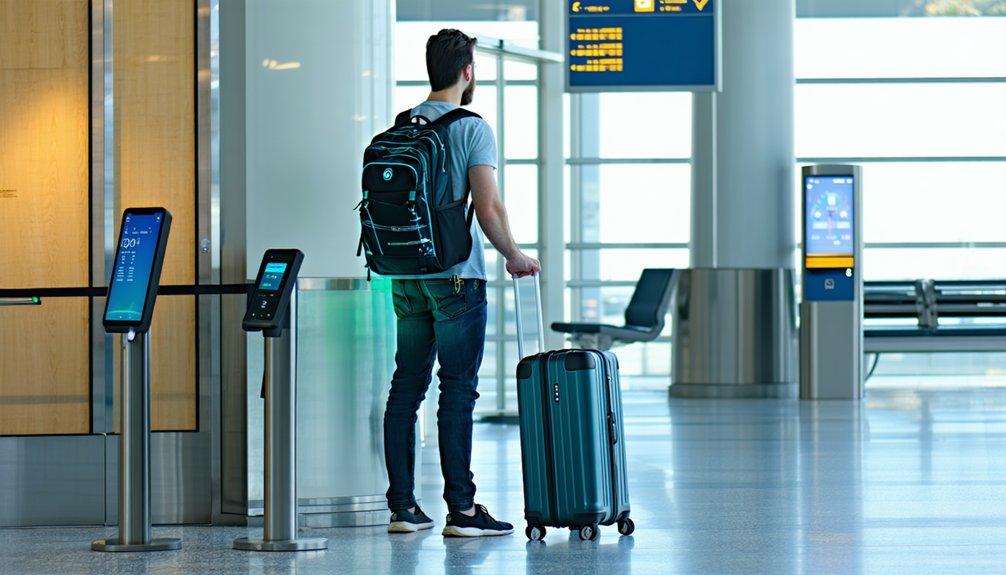

Smart travel gear fuses GPS and Bluetooth to deliver real‑time location updates, while crowdsourced networks extend coverage beyond Bluetooth range. Biometric locks and slash‑resistant recycled composites protect belongings from theft and damage. Integrated health sensors monitor posture and heart rate, offering haptic feedback and personalized activity coaching. 3D‑printed carbon‑fiber lattices provide strength with minimal weight, and AI‑driven routing predicts gate changes and transit delays. Exploring further reveals the full spectrum of convenience and safety benefits.
Key Takeaways
- Real‑time GPS tracking and crowdsourced Bluetooth networks let travelers locate luggage instantly, reducing loss and theft risk.
- Biometric locks with fingerprint or facial recognition provide keyless, one‑second access while preventing unauthorized entry.
- Motorized wheels and gesture controls enable autonomous suitcase movement, freeing hands and streamlining navigation through terminals.
- Integrated health sensors and weight monitors offer on‑the‑go wellness alerts and ensure baggage stays within airline limits.
- Sustainable 3D‑printed carbon‑fiber shells combine lightweight durability with slash‑resistant protection, extending product lifespan and safety.
How Smart Luggage Uses GPS & Bluetooth for Real‑Time Tracking
Smart‑luggage tracking combines satellite‑based GPS and short‑range Bluetooth to deliver continuous, real‑time location data.
The GPS autonomy component connects directly to global satellite constellations, providing precise coordinates across borders, aircraft, and maritime routes without reliance on local networks.
Simultaneously, Bluetooth range—typically ten meters in everyday environments—enables nearby smartphones to relay location updates when the luggage is within proximity, triggering audible alerts for rapid recovery.
Integrated networks such as Apple’s Find My and Samsung SmartThings Find amplify coverage, allowing devices to report positions anonymously through dense user bases.
Battery designs balance longevity, with Bluetooth trackers lasting about a year and GPS units sustaining several weeks to months, ensuring dependable monitoring throughout journeys.
This dual‑technology framework fosters a sense of community security and belonging among travelers.
When out of Bluetooth range, the device can piggyback off a nearby phone with internet to report its location, leveraging the crowdsourced network of other users.
The Apple AirTag is best for iPhone users.
Travelers who frequently fly experience high baggage loss rates and benefit from real‑time visibility.
Why Anti‑Theft Locks and Slash‑Proof Materials Protect Smart Luggage
Advanced‑security engineering combines biometric anti‑theft locks with slash‑proof fabrics to create a dual barrier that deters both physical intrusion and opportunistic theft. Biometric locks use fingerprint scanners that recognize users in under one second, eliminating keys and dials that thieves can tamper with. The keyless design, TSA‑approved master‑key compatibility, and battery‑level alerts guarantee seamless, reliable access throughout travel. Fast, reliable fingerprint scanner provides 360° recognition and supports multiple users, enhancing convenience for family or group travel. Slash resistant fabrics, reinforced with zinc alloy or stainless steel, prevent cutting, puncture, and forced entry, while lockable zippers and hidden pockets block pickpocket attempts. Together, these features protect electronics, passports, and valuables in hostels, layovers, and crowded urban transit, offering travelers a trustworthy sense of security and belonging. Lockable zippers add an extra layer of defense against pickpocket attempts, ensuring that even determined thieves cannot easily access the bag’s interior. Integrated luggage locks act as a first line of defense, keeping personal items safe throughout the journey.
How Eco‑Friendly Materials Make Smart Luggage Sustainable
By integrating recycled ocean‑bound plastics, post‑consumer polyester, and reclaimed polypropylene, manufacturers transform waste streams into lightweight, durable shells that meet rigorous travel standards. The resulting structures combine recycled textiles with plant leathers, such as mushroom‑derived and apple‑peel alternatives, delivering a biodegradable aesthetic without sacrificing strength. Closed‑loop design mandates that at least 35 % of each suitcase’s mass originates from pre‑owned units and 45 % from post‑consumer waste, while recycled polycarbonate and aluminum reinforce critical stress points. Energy‑efficient factories employ fair‑wage labor and transparent supply chains, reducing carbon footprints through renewable energy and reforestation partnerships. Compostable packaging and long‑life warranties further extend product lifecycles, ensuring that smart luggage remains sustainable, reliable, and socially resonant. The market’s shift toward sustainable materials reflects growing consumer demand for eco‑friendly travel solutions. The use of organic hemp fiber enhances durability while supporting regenerative agriculture.
How Integrated Health‑Monitoring Turns Smart Luggage Backpacks Into Fitness Assistants
Typically, integrated health‑monitoring sensors embedded in travel backpacks transform them into personal fitness assistants, continuously tracking heart rate, posture, and step count while the user moves through airports and city streets.
Biometric sensors capture real‑time physiological data, which the onboard processor analyzes against predefined wellness thresholds. When deviations occur, subtle haptic alerts prompt corrective posture or pacing adjustments, reinforcing safe travel habits.
Simultaneously, activity coaching modules generate personalized step‑goal recommendations, syncing with mobile health apps to log progress across journeys. This seamless feedback loop cultivates a sense of community among travelers who share performance dashboards, fostering collective motivation. Weight sensors also provide real‑time weight readings, helping users stay within airline limits while monitoring their health metrics.
How 3D‑Printed Carbon Fiber Boosts Smart Luggage Strength While Reducing Weight
Harnessing 3D‑printed carbon‑fiber structures, manufacturers can reinforce smart luggage frames while shedding excess mass. The process begins with a high‑resolution 3D printing aesthetic that defines intricate lattice geometries, then a resin infusion step fills voids, creating a monolithic composite. This hybrid yields a strength‑to‑weight ratio far exceeding traditional polycarbonate shells, allowing thinner walls without compromising impact resistance.
Travelers experience a lighter carry weight, which translates into reduced fatigue during long transits and lower airline fees. The material’s stiffness also protects embedded electronics, ensuring reliable GPS, battery, and sensor operation.
How AI Personalization Lets You Order One‑Piece Smart Luggage Kits
The lightweight strength achieved through 3D‑printed carbon‑fiber frames sets the stage for a new level of customization, as AI‑driven personalization now enables travelers to order fully integrated, one‑piece smart luggage kits.
AI customization analyzes travel itineraries, biometric preferences, and airline baggage policies to recommend exact dimensions, power‑bank capacity, and sensor suites.
Kit subscriptions deliver updates, firmware upgrades, and optional accessories on a predictable schedule, reinforcing a sense of community among tech‑savvy globetrotters.
Platforms such as Indiegogo and airline‑linked mobile apps streamline ordering, while predictive AR sizing guarantees the kit fits overhead bins before departure.
The result is a seamless, belonging‑focused experience where each piece of luggage arrives pre‑configured, reliable, and ready for hands‑free travel.
Where to Buy Smart Travel Gear Online in 2026?
Where can savvy travelers source the latest smart travel gear in 2026? Direct to consumer marketplaces such as Amazon host a curated selection, ranging from the VRURC charger ($24.99) to the Zoppen RFID wallet ($15.99) and TESSAN universal adapters.
Specialty brands like Matador Equipment and TravelSmith sell their own e‑stores, offering segmented backpacks, RFID‑blocking wallets, and clearance bundles that foster community identification. Subscription bundles emerging from these platforms aggregate power banks, tech pouches, and waterproof packable bags into monthly kits, ensuring members receive updates without repeat purchases.
YouTube‑recommended retailers further validate choices, linking to HydraPak water bottles and Tomtoc organizers. This ecosystem delivers reliable, community‑centric access to essential travel tech while maintaining price transparency and brand loyalty.
What’s Next for Smart Luggage and Convenience‑Focused Travel Tech?
Savvy travelers now turn their attention from sourcing smart accessories to the evolving capabilities of the luggage itself, where integrated GPS, autonomous motion, and biometric security converge to redefine convenience.
Emerging models embed predictive routing algorithms that anticipate gate changes, crowd flow, and transit delays, dynamically adjusting motorized wheels to guide suitcases through terminals with minimal user input. Gesture control interfaces allow users to command follow‑mode, lock, or charging functions with a simple hand motion, reinforcing a sense of belonging to a tech‑forward community. Biometric fingerprint and facial recognition locks restrict access, while AI‑driven anti‑theft alerts and real‑time location sharing maintain trust. Modular compartments, built‑in power banks, and health‑monitoring backpacks complete the ecosystem, positioning smart luggage as an anticipatory travel partner for business and leisure travelers alike.
References
- https://www.greenfield-bag.com/news/new-trend-of-the-global-luggage-and-bag-indust-85236911.html
- https://www.thebusinessresearchcompany.com/report/travel-accessories-global-market-report
- https://www.news.market.us/luggage-statistics/
- https://www.theinnatstonecliffe.com/blog/the-ultimate-packing-list-best-items-for-travel-in-2026-including-mackinac-island-essentials
- https://smartflyer.com/story/2026-travel-trends/
- https://solotravelerworld.com/finding-lost-or-stolen-bags-a-review-of-luggage-trackers/
- https://www.techgearlab.com/topics/cool-gadgets/best-bluetooth-tracker
- https://www.youtube.com/watch?v=kuslpWV-H3M
- https://www.gonomad.com/255441-gps-trackers-for-luggages
- https://www.paj-gps.com/suitcase-tracker/